Best Beaches in the Dominican Republic (2026): Every Coast Compared
The standout beaches from all eight beach regions, grouped by what you want: calm water, wild and empty sand, islands, surf, or a swim near the airport
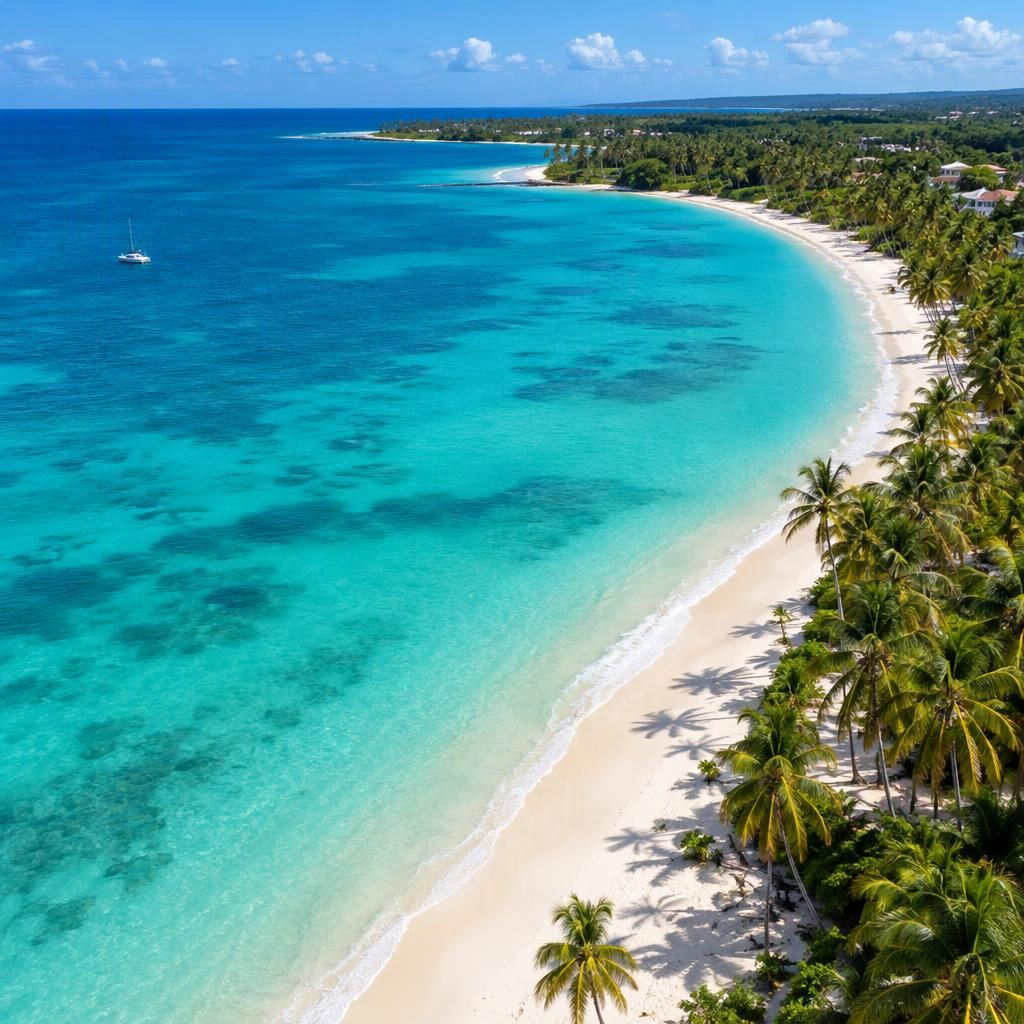
The Dominican Republic has more than one kind of beach, and that is the first thing to understand before you choose one. The east coast around Punta Cana is long, white and protected by a reef. The south-east is calm Caribbean water with islands offshore. The north faces the open Atlantic, with surf, wind and big wild bays. The far south-west has empty white sand at the end of a long road, and stone beaches where cold rivers run into the sea.
This guide pulls the standouts from all eight beach regions into one place and groups them by what people actually want from a beach day. Every beach links to its own page with access, water conditions and facilities, and every region links to its hub.
The short version: For the classic white-sand, calm-water beach, go to Juanillo Beach or Bávaro Beach in Punta Cana, or Playa Dominicus near Bayahíbe. For wild and empty, Bahía de las Águilas and Playa Rincón. For an island day, Isla Saona or Cayo Arena. For surf and kite, Cabarete. For a swim near the capital’s airport, Boca Chica.
The eight beach regions at a glance
| Region | Coast | Nearest airport | Known for | Standout beach |
|---|---|---|---|---|
| Punta Cana & Bávaro | East | PUJ | Reef-protected white sand, big resorts | Juanillo Beach |
| La Romana & Bayahíbe | South-east Caribbean | LRM, PUJ | Calm water, Saona and Catalina | Playa Dominicus |
| Santo Domingo, Boca Chica & Juan Dolio | South Caribbean | SDQ | Beaches close to the capital | Boca Chica Beach |
| Barahona & Pedernales | South-west Caribbean | SDQ | Empty sand, river beaches | Bahía de las Águilas |
| Samaná Peninsula | North-east Atlantic | AZS, SDQ | Palm-backed coves, whales | Playa Rincón |
| Miches & Costa Esmeralda | North-east, Samaná Bay | PUJ | Long quiet beaches, new resorts | Playa Esmeralda |
| Puerto Plata, Sosúa & Cabarete | North Atlantic | POP | Kite, surf, a calm snorkel bay | Sosúa Beach |
| Montecristi & Punta Rucia | North-west Atlantic | STI, POP | Sandbars, cays, El Morro | Cayo Arena |
You can browse every beach on one page at our beaches directory. If you are still deciding which side of the island suits your trip, read Caribbean vs Atlantic coast first.
The ten beaches we would build a trip around
If you only want a shortlist, these are the beaches that are worth planning around rather than fitting in.
- Juanillo Beach, Punta Cana. A sheltered crescent of powder-white sand inside Cap Cana, with very clear water, a gentle entry and much less sargassum than the rest of the east coast. Public access through the Caleton Beach Club.
- Bahía de las Águilas, Pedernales. Eight kilometers of white sand inside Parque Nacional Jaragua, with no buildings, no vendors and usually calm, shallow water. A long drive and a 15 to 20 minute boat ride from La Cueva.
- Playa Rincón, Samaná. Roughly 3 to 4 km of undeveloped, palm-backed sand near Las Galeras, with a cold river, the Caño Frío, at the west end.
- Bávaro Beach, Punta Cana. Thirty kilometers of white sand and reef-calmed water. The busiest beach on this list, and the easiest.
- Isla Saona, La Romana & Bayahíbe. The country’s most famous day-trip island, inside a national park, with palm-lined beaches and the waist-deep natural pool on the way.
- Playa Grande, Río San Juan. A wide curve of golden sand under cliffs, with big surf and real currents. More for looking and surfing than for an easy swim.
- Sosúa Beach, Puerto Plata. A sheltered horseshoe bay with calm, clear water and reef snorkeling straight from the sand, 10 to 15 minutes from Puerto Plata airport.
- Cayo Arena, Punta Rucia. A tiny white sandbar ringed by coral in the middle of the sea, reached by speedboat through the mangroves.
- Playa Esmeralda, Miches. A long, pale beach with palms and mountains behind it, facing north into Samaná Bay, which keeps most sargassum away.
- Playa Frontón, Las Galeras. A remote strip of sand under limestone cliffs, reached by boat or a long forest hike, with some of the peninsula’s best snorkeling on calm days.
Best beaches for calm water
Calm water is what most people mean when they say they want a “Caribbean beach”, and in the Dominican Republic it comes from three things: a reef offshore, a sheltered bay, or the Caribbean Sea itself on the south coast.
Punta Cana. Bávaro Beach is calm because an offshore reef breaks the Atlantic swell, so the entry is gradual and currents are rare in the resort zones. Arena Gorda to the north has the same water. Cabeza de Toro, between Bávaro and Cap Cana, is reef-protected and bay-sheltered, and quieter. Juanillo Beach is the calmest and clearest of all, and Playa Blanca inside Puntacana Resort & Club uses an offshore barrier to keep sargassum out of the swimming area.
La Romana & Bayahíbe. This is the calmest stretch of the country. Bayahíbe Beach is the village beach and the pier for island boats, with very calm, clear water. Next door, Playa Dominicus is a long Blue Flag beach of pale sand and flat water, with only light chop on windy afternoons. Minitas Beach at Casa de Campo is protected by rock jetties and mostly for resort guests.
Santo Domingo. Boca Chica Beach is a reef-protected lagoon, mostly no deeper than about 1.2 meters for a long way out, which makes it the easiest beach in the country for small kids. Juan Dolio is mostly calm with a reef close to shore, and Playa Guayacanes is the calm local beach for fried fish. West of the city, Playa Palenque is usually calm, with palm shade.
The north coast exceptions. Most of the north faces open Atlantic, but a few bays stay calm. Sosúa Beach is the safest swim on the Puerto Plata coast, Playa Alicia next door is mostly calm, and Playa Caletón near Río San Juan is a small cove protected by rocky points. In Samaná, Cayo Levantado sits inside the bay, La Playita is the calm village beach of Las Galeras and Playa Madama is a sheltered cove. In the north-west, Playa La Ensenada near Punta Rucia is calm, very clear and shallow, and Punta Rucia Beach is a protected village bay.
Best for small children: Boca Chica, Bayahíbe, Dominicus, Juanillo, Playa La Ensenada and Cayo Levantado. All are shallow near shore and usually flat, though only resort beaches tend to have lifeguards.
Best wild and empty beaches
These are the beaches with no resort behind them, or very little of anything at all. Most need a car, a boat or some patience, and few have lifeguards.
- Bahía de las Águilas: the emptiest famous beach in the country. Bring water, food, shade and a trash bag, because there is nothing on the sand.
- Playa Cabo Rojo: white sand under red bauxite cliffs on the road to the boats, now next to a cruise port. Clear water, calm to choppy with the wind.
- Playa Pedernales: the wide, nearly empty town beach at the end of the road, best at sunset.
- Playa Rincón, Playa Frontón and Playa Madama: the three remote beaches around Las Galeras, linked by small boats on a beach boat trip.
- Playa Cosón: a long, uncrowded Atlantic beach west of Las Terrenas, with waves in winter and a few upscale hotels.
- Playa El Valle and Playa Morón: cliff-framed north-coast beaches in Samaná with strong surf. Come for the scenery, not the swim.
- Macao Beach: the wild Atlantic alternative to Punta Cana’s resort strip, with dunes, palms, surf and no beachfront hotels.
- Playa Limón: three empty kilometers near El Cedro, better for horseback rides and sunsets than swimming.
- Playa Grande and Playa Preciosa: golden sand and powerful water near Río San Juan.
- Playa El Morro: darker sand at the foot of Montecristi’s flat-topped mesa, quiet on weekdays, with Cayo Zapato just offshore.
- Playa Buen Hombre: a remote fishing village with very shallow flat water inside the reef, mostly visited by kitesurfers.
A rule that applies to all of them: read the water before you go in, swim where locals swim, and leave on calm terms with the weather. Empty beaches are empty partly because help is far away.
Best island and sandbar beaches
The Dominican Republic’s offshore islands and sandbars are a trip in themselves. The full how-to, with prices and departure points, is in our island day trips guide. The short list:
- Isla Saona: the big one, with palm-lined beaches on the western side, buffet lunches and a stop at the Saona natural pool. Busy on the main tour beaches.
- Canto de la Playa: Saona’s quieter south-east beach, for the same scenery with more space.
- Isla Catalina: a small island off La Romana with a calm beach and the region’s best-known snorkel wall.
- Isla Catalinita: a tiny, wild islet at the eastern edge of the national park, for snorkelers and divers.
- Cayo Levantado: a short boat ride across Samaná Bay to calm, clear water, often paired with whale watching from mid-January to March.
- Cayo Arena: the famous sandbar off Punta Rucia, with coral all around and a few thatched huts.
- Cayos Siete Hermanos: seven uninhabited cays off Montecristi with no facilities at all, for snorkelers and birders.
Best surf and kite beaches
The surf is almost all on the Atlantic side, plus one break near the capital that catches south swell.
Surf. Encuentro Beach near Cabarete is the main surf beach in the country, with reef breaks for experienced surfers, whitewater for beginners. It is cleanest in the morning. Playa Grande and Playa Preciosa near Río San Juan get powerful beach and reef surf. In Samaná, the surf end of Playa Bonita has waves and small hotels behind it. On the east coast, Macao Beach is the closest surf to Punta Cana, with board rental shacks on the sand. Near the capital, Playa Caribe is a half-moon cove where weekend surfers and bodyboarders go.
Kite. Kite Beach in Cabarete has the schools, the flat water inside the reef and reliable afternoon wind, strongest from June to August. Cabarete Beach itself is calm in the morning and full of kites and windsurfers in the afternoon. See kitesurfing lessons in Cabarete for 2026 prices. In Las Terrenas, Punta Popy has the town’s kite scene, and in the far north-west, Playa Buen Hombre has flat, shallow water and strong trade winds, best from about April to September.
Winter is surf season. North swells from about December to March bring the biggest waves to the Atlantic beaches. Summer, roughly June to August, is usually flatter for swimmers and windier for kiters.
Best beaches for snorkeling
The clearest snorkeling is on the Caribbean side and around the offshore cays.
- Isla Catalina: The Wall and The Aquarium, the two classic stops, with excellent visibility on most days.
- Sosúa Beach: reef along both edges of the bay, reachable from the sand, with dive shops in town.
- Cayo Arena: coral all around a tiny sandbar. Do not stand on it.
- Playa Frontón: clear water under the cliffs on calm days.
- Cayos Siete Hermanos: shallow sea grass, sand and rock walls around 3 meters deep.
- Juanillo Beach: gentle snorkeling near the rocky ends of the bay.
- Playa Guayacanes: reef close to shore, a short drive from SDQ.
For diving, the bases are Bayahíbe (scuba diving in Bayahíbe), the La Caleta underwater park near Boca Chica, and Sosúa.
Something different: river beaches and stone coves
The Barahona coast in the south-west has a kind of beach you will not find elsewhere in the country. Mountain rivers run straight into the Caribbean over white stones, so you can swim in cold fresh water a few meters from the sea.
- Playa San Rafael: stepped river pools and small waterfalls at the Balneario San Rafael, the busiest stop on the coast road. The sea here has strong waves and undertow; swim in the pools.
- Playa Los Patos: an icy, shaded freshwater lagoon at the mouth of one of the world’s shortest rivers.
- Playa El Quemaito: a stone-and-pebble cove south of Barahona with some of the calmer sea water on the coast.
- Playa Paraíso: the quiet village beach of Paraíso, with turquoise water and simple fish restaurants, often rough.
Bring water shoes for all of them. Elsewhere, the cold Caño Frío river at the west end of Playa Rincón gives you the same sea-and-river swim on the Samaná side. Our Barahona and Pedernales road trip puts the south-west beaches in order.
Best beaches near each airport
If you have a short trip, a layover or simply do not want a long transfer, pick the beach by airport.
| Airport | Closest good beaches | Drive time (approx.) |
|---|---|---|
| Punta Cana (PUJ) | Playa Blanca, Juanillo Beach, Bávaro Beach | 5 to 10 min, 10 to 15 min, 25 to 35 min |
| Santo Domingo (SDQ) | Boca Chica Beach, Juan Dolio Beach | about 10 min, about 40 min |
| Puerto Plata (POP) | Sosúa Beach, Cabarete Beach, Playa Dorada | 10 to 15 min, 20 to 25 min, 15 to 25 min |
| Samaná El Catey (AZS) | Playa Las Ballenas, Playa Cosón in Las Terrenas | 30 to 45 min |
| La Romana (LRM) | Minitas Beach, Bayahíbe Beach, Playa Dominicus | 5 to 10 min, 20 to 25 min, about 25 min |
| Santiago (STI) | Playa El Morro, Playa La Ensenada | about 2 hours |
Boca Chica is close enough to Las Américas airport that a swim on a long layover is realistic with at least six hours between flights; our beaches near Santo Domingo guide explains how. Juanillo and Playa Blanca are the easy answer for a first or last afternoon in Punta Cana.
The best beaches, region by region
Punta Cana & Bávaro. The country’s main resort coast and its most reliable beach water. Start with Bávaro for the classic strip and Juanillo for the prettiest bay, then Uvero Alto for quiet and Macao for waves. The trade-off is sargassum on the exposed east-facing beaches in summer.
La Romana & Bayahíbe. The calm Caribbean side, and the departure point for Saona and Catalina. Playa Dominicus is the best mainland beach. Read the La Romana & Bayahíbe travel guide.
Santo Domingo, Boca Chica & Juan Dolio. Close, cheap and very Dominican rather than postcard-perfect. Boca Chica for shallow water, Juan Dolio for space. Do not swim at the city’s Malecón beaches.
Barahona & Pedernales. The most remote region and the most dramatic contrasts: river pools at San Rafael, red cliffs at Cabo Rojo and the empty sweep of Bahía de las Águilas. It is a road trip with small hotels and cash, not a resort stay.
Samaná Peninsula. Green hills down to the sand, boat-only coves and humpback whales from mid-January to the end of March. Playa Rincón is the headline, with Las Ballenas and Punta Popy as walkable town beaches in Las Terrenas. See the Samaná travel guide.
Miches & Costa Esmeralda. Long, quiet beaches on Samaná Bay with a new cluster of all-inclusives behind Playa Esmeralda and Carlyle Cove. Less sargassum than Punta Cana, but open bay water with no reef. See the Miches travel guide.
Puerto Plata, Sosúa & Cabarete. The most varied stretch: Sosúa for calm snorkeling, Kite Beach and Encuentro for wind and waves, Playa Dorada for resorts and Playa Grande for wild beauty. See the Puerto Plata travel guide.
Montecristi & Punta Rucia. Sandbars, cays and a mesa in the sea, with very few foreign tourists outside the Cayo Arena tours. Cayo Arena, Playa La Ensenada and Playa El Morro are the three to know. See the Montecristi & Punta Rucia travel guide.
When to go: seasons, waves and sargassum
Dry season. December to April is the driest and most reliable period across the country, and the busiest. It is also when boat crossings to Saona, Catalina and Bahía de las Águilas are usually calmest. The catch on the north coast is winter swell, which brings waves and rip currents to beaches like Playa Dorada, Playa Grande and Cosón.
Summer. June to August is usually the calmest swimming of the year on the Atlantic beaches and the windiest time for kiting in Cabarete. It is also sargassum season.
Sargassum. The brown seaweed arrives mostly between May and September, and it hits east-facing exposed beaches hardest: Bávaro, Macao and Uvero Alto in Punta Cana. Sheltered or north-facing beaches do better, including Juanillo, Playa Blanca, the Miches beaches, Cayo Levantado and Sosúa. The south coast sees less, though Boca Chica has had bad spells in some years, including 2023 and September 2025. Resorts rake their sand each morning. Our sargassum guide has the details.
Hurricanes. The season runs June to November, with the highest risk from August to October. Most days are still fine for the beach, but storms can cancel boat trips, so leave some flexibility.
Day of the week. On Dominican beaches this matters as much as the month. Sundays and holidays, above all Semana Santa (Easter week), fill Boca Chica, Juan Dolio, La Ensenada, Cayo Arena and the Barahona river beaches with Dominican families. Weekdays can feel nearly empty.
Practical tips for any Dominican beach
- Every beach is public by law, including the sand in front of resorts. Road access through gated areas is a separate question, so check before you drive.
- Lifeguards are rare outside resort beaches. Respect red flags, especially at Playa Grande, Encuentro, Macao, El Valle and the Barahona coast.
- Carry pesos. Chairs, fish lunches, boat rides and park fees are often cash only, and fish is usually sold by weight, so confirm the price before it is cooked.
- Use reef-safe sunscreen, do not stand on coral, and leave starfish in the water at the Saona natural pool and elsewhere.
- Bring water shoes for stone beaches, rocky entries at Juan Dolio and Guayacanes, and wading ashore from boats.
- Plan the base, not just the beach. Our where to stay in the Dominican Republic guide matches each region to the kind of trip it suits.
Frequently Asked Questions
What is the most beautiful beach in the Dominican Republic?
Two names come up most. Juanillo Beach in Cap Cana, near Punta Cana airport, is the one many Dominicans name first, with powder-white sand and a sheltered, very clear bay. Bahía de las Águilas in the far south-west is the wilder answer: 8 km of empty white sand inside Parque Nacional Jaragua, reached by a short boat ride. Playa Rincón on the Samaná Peninsula is the third contender.
Which part of the Dominican Republic has the calmest water?
The south-east Caribbean coast around Bayahíbe and Dominicus, and the reef-protected beaches of Punta Cana such as Bávaro and Juanillo. Near Santo Domingo, Boca Chica is a shallow, reef-protected lagoon. On the north coast, Sosúa Beach and Playa Caletón are the calm exceptions on an Atlantic shoreline.
Where are the best surf beaches in the Dominican Republic?
Encuentro Beach near Cabarete is the country's main surf beach, with reef breaks for experienced surfers and whitewater for beginners. Playa Grande and Playa Preciosa near Río San Juan have powerful waves, Macao Beach is the closest surf to Punta Cana, and Playa Caribe between Boca Chica and Juan Dolio is where Santo Domingo's surfers go.
Which Dominican beaches have the least sargassum?
Sheltered and north-facing beaches usually see the least. Juanillo Beach and Playa Blanca in Punta Cana, the Miches beaches facing Samaná Bay, Cayo Levantado inside the bay, Sosúa Beach and the south-east Caribbean coast around Bayahíbe and Dominicus all tend to stay clearer than Punta Cana's exposed east-facing beaches between May and September.
Are beaches in the Dominican Republic public?
Yes. All beaches in the Dominican Republic are public by law, including the sand in front of resorts. Getting to them is another matter: gated areas such as Cap Cana or Puntacana Resort & Club control road access, and some beaches like Bahía de las Águilas, Cayo Arena or Playa Frontón are reached by boat.
What is the best beach near Punta Cana airport?
Playa Blanca inside Puntacana Resort & Club is about 5 to 10 minutes from the airport and sells a day pass of around $50 per person in 2026, credited to food and drinks. Juanillo Beach in Cap Cana is about 10 to 15 minutes away, and central Bávaro Beach about 25 to 35 minutes.