All-Inclusive vs Airbnb in the Dominican Republic (2026): Which Fits Your Trip and Region?
When each option wins, what they cost in Punta Cana, and why the answer flips in Samaná, Cabarete, Bayahíbe and the south-west
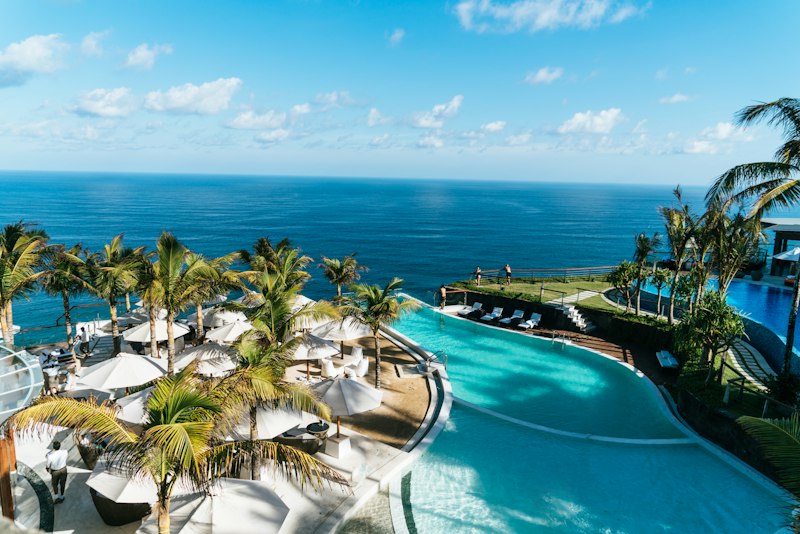
The all-inclusive vs Airbnb debate is more interesting than most travel content makes it. They are different vacation styles, not interchangeable options, and the right choice depends on who is traveling, for how long, what kind of trip they want, and where in the Dominican Republic they are going. Punta Cana and Miches are built around all-inclusives. Las Terrenas, Cabarete and Bayahíbe are towns where a rental and a walk to dinner make more sense.
Here is how to think about it.
The short version: All-inclusive wins for first-timers, couples on short trips, families with young kids, anyone wanting zero decision-making, and almost anyone going to Miches. Airbnb wins for groups of 4+, longer stays (10+ days), repeat visitors, food-focused travelers, and towns with a real restaurant scene such as Las Terrenas, Cabarete, Sosúa, Bayahíbe and the Zona Colonial. There is no universally correct answer.
The Cost Comparison (Punta Cana, Approximate 2026 Prices)
The biggest myth in this debate is that one is obviously cheaper than the other. It depends on your group and habits. The figures below are approximate 2026 ranges for Punta Cana, the most common case; other regions are covered further down.
Couple, 7 nights, mid-range trip
All-inclusive (mid-range Bávaro resort):
- Resort + flights + transfers: $2,800 to $3,800 total
- Excursions (1-2): $200 to $400
- Tips: $100 to $150
- Off-resort dining (optional): $100 to $200
- Total: $3,200 to $4,500
Airbnb equivalent (Punta Cana Village or Cocotal, 1-bed):
- Airbnb 7 nights: $700 to $1,200
- Flights: $700 to $1,000
- Rental car 7 days + insurance: $300 to $500
- Groceries: $150 to $250
- Restaurants (~$60 per dinner, 5 nights): $300 to $400
- Lunches and breakfasts (mostly home): $80 to $120
- Excursions: $200 to $400
- Tips: $80 to $120
- Total: $2,500 to $4,000
For a couple, the math is roughly comparable. Where Airbnb pulls ahead is when you do not need a full restaurant experience for every meal.
Family of four, 7 nights
All-inclusive (family resort, 2 adults + 2 kids):
- Resort + flights + transfers: $4,500 to $6,500 total
- Excursions: $400 to $800
- Tips: $150 to $200
- Total: $5,000 to $7,500
Airbnb equivalent (3-bed villa or condo):
- Airbnb 7 nights: $1,200 to $2,500
- Flights for 4: $1,400 to $2,000
- SUV rental + insurance: $400 to $600
- Groceries: $300 to $500
- Restaurants (4 dinners out): $400 to $600
- Excursions: $400 to $800
- Tips: $100 to $150
- Total: $4,200 to $7,000
Family Airbnb is competitive on cost and gives you more space. The trade-off is logistics: cooking, driving, planning. For a family week, that adds up.
Group of 6 to 8 friends, 7 nights
This is where Airbnb clearly wins on cost. A 4-bedroom villa in Cap Cana or Bávaro at around $400 to $700 per night in 2026, split across 6 to 8 people, works out to roughly half the cost of equivalent all-inclusive rooms.
The All-Inclusive Case
Where all-inclusive wins
- First international trip. Removes friction from an unfamiliar destination.
- Short trips (3 to 5 nights). Not enough time to set up cooking and rental car logistics.
- Couples on a romance trip. Pre-paid drinks and food removes “what should we do for dinner” friction.
- Families with kids under 10. Kid clubs, supervised pools, no cooking, predictable food.
- Travelers who hate decision fatigue. “Where to eat tonight” becomes “which of these 8 on-site restaurants.”
- Special occasions. Birthdays, honeymoons, anniversaries: the resort handles the experience.
- Hurricane season trips. Resorts have generators, supplies, and protocols if weather hits.
What all-inclusive trades away
- Food adventure. Even the best resort restaurants are pale shadows of La Yola, Jellyfish, or Passion by Martín Berasategui.
- Cultural immersion. Resort grounds are deliberately designed to feel familiar, not Dominican.
- Schedule flexibility. Buffet hours, restaurant closures, etc. set your day’s rhythm.
- Local economic engagement. Most spending stays within the resort.
Resort tiers in Punta Cana (approximate 2026 rates)
- Budget all-inclusive (around $150-$250/night per couple): decent food, basic rooms, fewer à la carte restaurants. Examples include older Riu and Princess properties.
- Mid-range (around $250-$450/night): wider restaurant variety, better rooms, more activities. Properties like Barceló Bávaro Palace and Hard Rock.
- Luxury (around $450-$900/night): real food quality, butler service, premium spirits, swim-up rooms. Properties like Excellence Punta Cana and Secrets Royal Beach.
- Ultra-luxury (around $900+/night): small properties, exceptional food, overwater suites. Sanctuary Cap Cana anchors this tier.
The Airbnb Case
Where Airbnb wins
- Groups of 4 or more. The cost math flips decisively in your favor.
- Longer stays (10+ nights). Resort fatigue is real. By night 10 you’ll crave a kitchen and your own grocery list.
- Food-focused travelers. Punta Cana’s best restaurants are off-resort, and towns like Las Terrenas and Cabarete have restaurant scenes that only make sense if you are free to eat out. An Airbnb base lets you actually eat at them.
- Repeat visitors. Once you know the area, you don’t need the resort training wheels.
- Digital nomads or partial workers. Real WiFi, real workspace, real kitchen.
- Multi-generational trips. Grandparents, parents, kids in a villa with multiple rooms beats trying to coordinate 3 hotel rooms.
- Cultural curiosity. Living in a Dominican neighborhood, shopping at colmados, exchanging good morning with neighbors: a different trip entirely.
Best Airbnb neighborhoods in Punta Cana
- Punta Cana Village: residential, gated, 5 minutes from the airport, walkable to restaurants and a small grocery
- Cocotal: large gated community next to Bávaro, pool/golf access, family-friendly
- Cap Cana: luxury condos and villas, gated, near Juanillo Beach
- Los Corales (in Bávaro): beachfront condos, walkable beach access, mixed quality
- Plaza Bavaro / Bávaro proper: larger selection, broader price range
Where Airbnb gets harder
- Beach access. All DR beaches are public by law, but reaching specific beach stretches without walking through resort grounds requires using public access roads.
- Transportation. Almost always need a rental car, or you’re paying for taxis/Uber daily.
- Furniture and appliance reliability. AC, hot water, internet quality varies. Read reviews carefully.
- Property management. A no-show owner with a broken AC is a nightmare. Look for hosts with 50+ reviews.
- Hurricane season risk. No on-site staff, no backup generator typically. If weather hits, you’re on your own.
By Region: Which Option Fits
| Region | Leans toward | Why |
|---|---|---|
| Punta Cana and Bávaro | Either | The biggest resort choice in the country, plus gated rental communities |
| Miches | All-inclusive | Six big resorts on Playa Esmeralda, little outside the gates, 1.5 hours from the airport |
| La Romana and Bayahíbe | Either | Dominicus resorts or villas at Casa de Campo; small hotels and rentals in walkable Bayahíbe |
| Samaná | Rental or small hotel | Las Terrenas and Las Galeras are full of villas and guesthouses; resorts are mostly at Cosón, El Portillo and on the bay |
| Puerto Plata coast | Depends on town | All-inclusives at Playa Dorada; rentals and small hotels in Cabarete and Sosúa |
| Santo Domingo coast | Either | Condo towers in Juan Dolio, apartments in the Zona Colonial, value all-inclusives in Boca Chica and Juan Dolio |
| Barahona and Pedernales | Small hotels and ecolodges | No large resorts in 2026; first big hotel expected in 2027 |
| Montecristi | Small hotels | A few hotels in town and a boutique lodge at Punta Rucia |
Miches: all-inclusive almost by default
The Costa Esmeralda resorts, from Club Med Michès to Secrets Playa Esmeralda, sit on their own stretch of coast. Miches town is small and the nearest real restaurant scene is in Punta Cana. Unless you want a self-drive trip around Montaña Redonda and the lagoons, book the resort. See the Miches travel guide.
Samaná: the rental capital of the beach regions
Las Terrenas has a big French and Italian community, the best restaurant scene on the peninsula and walkable beaches like Playa Las Ballenas and Punta Popy, which makes a rental easy. Las Galeras is guesthouses and villas with boat access to Playa Rincón. If you want an all-inclusive, look at Bahia Principe Explore El Portillo for families or Viva V Samana for adults. See the Samaná travel guide.
Puerto Plata coast: pick the town, then the format
Playa Dorada is the all-inclusive zone, with Iberostar Waves Costa Dorada next door. Cabarete is the opposite: no big all-inclusives, dozens of independent restaurants within walking distance and a large long-stay community, so rentals and small hotels win. Sosúa sits in between, with Casa Marina Sosúa as the main all-inclusive. See the Puerto Plata travel guide.
La Romana and Bayahíbe: villas, resorts or a village base
Casa de Campo is known for its villas, which suit groups and golfers. The Dominicus strip is resort country. Bayahíbe village is walkable and good for divers who want a guesthouse near the pier. See the La Romana and Bayahíbe guide.
The south-west and Montecristi: neither, in the usual sense
Neither region has big all-inclusives or a large rental market. Lodging is small hotels, guesthouses and ecolodges, often cash only. Book ahead for weekends and Semana Santa. See the Barahona and Pedernales road trip and Montecristi guides.
The Hybrid Approach
For trips of 8+ nights, consider splitting the stay:
- 3 to 4 nights all-inclusive to start: low-friction arrival, decompression, beach time
- 4 to 5 nights Airbnb to follow: explore the area, eat at off-resort restaurants, pace yourself
This hybrid is the best trip for many travelers, especially second-timers. You get both styles and avoid the diminishing returns of staying at a single resort for 10+ days.
The hybrid also works across regions: a few all-inclusive nights in Punta Cana or Miches, then a rental in Las Terrenas or Cabarete. See getting around for drive times between regions.
Quick Comparison
| Factor | All-Inclusive | Airbnb |
|---|---|---|
| First-timer friendly | Yes | Less so |
| Best for | Couples, families w/ young kids, short trips | Groups, longer stays, food-focused |
| Cost (couples, 7 nights, Punta Cana, around 2026) | $3,200-$4,500 | $2,500-$4,000 |
| Cost (groups of 6+) | Higher per-person | Significantly cheaper |
| Food variety | Limited to resort options | Full local restaurant scene |
| Beach access | Direct from resort | Via public access points |
| Transport needed | Often included | Rental car usually required |
| Cultural immersion | Minimal | Available if you seek it |
| Hurricane safety | Strong (generators, staff) | Weaker (no on-site backup) |
| Decision fatigue | Low | Higher |
| Best months | Year-round | Avoid Aug-Oct hurricane peak |
Common Mistakes With Each
All-inclusive mistakes
- Booking too short a trip and not getting your money’s worth on the included extras
- Picking a resort by price alone and ending up at a property that does not match your style
- Never leaving the property and missing what makes the region interesting
Airbnb mistakes
- Underestimating transportation costs and time
- Booking a property far from beaches and restaurants (“savings” wiped out by daily Uber bills)
- Skipping rental car insurance
- Not stocking groceries early and ending up eating out for every meal anyway
- Booking during hurricane season without a backup plan
Final Verdict
Both work in the Dominican Republic. The question is what kind of trip you want, and where.
- First trip, couple or family with young kids: all-inclusive. Don’t overthink it.
- Groups of 4+, longer stays, food-focused, repeat visitors: Airbnb wins.
- Trips of 8+ nights: consider the hybrid (split between resort and Airbnb).
- Miches: all-inclusive.
- Las Terrenas, Las Galeras, Cabarete, Bayahíbe village: rental or small hotel.
If you’re not sure, default to all-inclusive for trip one and switch to Airbnb on trip two once you know the area.
For the next steps in planning, work through the best time to visit guide and the first-timer’s guide.
Frequently Asked Questions
Is it cheaper to stay at an Airbnb or an all-inclusive resort in Punta Cana?
It depends on group size and trip style. For couples wanting full-service food, drinks, and entertainment, all-inclusive is usually cheaper once you account for restaurants, activities, and tips. For groups of 4 or more cooking some meals and drinking moderately, Airbnb can be 30-50% cheaper. Solo travelers and digital nomads almost always save with Airbnb.
Which Dominican regions suit an Airbnb or rental better than an all-inclusive?
Las Terrenas and Las Galeras in Samaná, Cabarete and Sosúa on the north coast, Bayahíbe village, Juan Dolio's condo towers and the Zona Colonial in Santo Domingo all have walkable restaurants and plenty of rentals and small hotels. Miches is the opposite: it is almost entirely big all-inclusives with little outside the gates. Punta Cana works both ways.
Can I stay at an Airbnb and still use a resort beach?
All beaches in the Dominican Republic are public by law, so yes, you can access any beach from a public entry point. However, walking through resort grounds without being a guest is restricted. Practical implications: you can use Bávaro Beach or Playa Dominicus freely, but reaching specific stretches in front of resorts may require approaching from a public access road.
Are Airbnbs in the Dominican Republic safe?
Yes, especially properties in established expat-friendly developments like Punta Cana Village, Cap Cana, Cocotal, and Los Corales. These are gated communities with security. Outside Punta Cana, the established traveler areas such as central Las Terrenas, Cabarete, Sosúa, Bayahíbe and Juan Dolio have a long track record with rentals. Avoid extremely cheap Airbnbs in unfamiliar inland neighborhoods. Read reviews carefully, look for properties with 50+ stays, and prefer those with on-site or nearby property managers.
Do I need a rental car if I stay at an Airbnb?
Yes, in most cases. Airbnbs are usually outside walking distance of restaurants, beaches, and supermarkets. A rental car (around $35 to $70 per day in 2026) gives you full mobility. Alternatively, Uber works in many Punta Cana neighborhoods for shorter trips, and pre-booked drivers can handle airport runs and beach excursions. In walkable towns like Cabarete, central Las Terrenas or Bayahíbe village, you can often skip the car.
Can I cook at an Airbnb? Where do I buy groceries?
Most Airbnbs have full kitchens. The major grocery chains are Supermercado Nacional, Jumbo, and Sirena. They carry standard international brands plus local Dominican products. Imported items cost noticeably more than in the US; local produce, meat, and Dominican brands are good value. A week of groceries for a family was around $200 to $400 in 2026. In small places like Las Galeras or Punta Rucia, stock up in a bigger town first.
Is the all-inclusive food actually good?
Quality varies by resort tier. Mid-range all-inclusives have decent buffets and 5-7 themed à la carte restaurants of varying quality. Luxury all-inclusives like Sanctuary Cap Cana or Excellence offer strong food across multiple restaurants. The trade-off across all tiers: you trade dining variety and adventure for convenience. If food is central to your trip, an Airbnb plus restaurant exploration usually wins.
Which is better for families with kids: all-inclusive or Airbnb?
All-inclusive almost always wins for families with young kids. Pre-paid food, kid clubs, supervised pools, and on-site activities reduce decision fatigue and cost during a stressful kid-traveling week. Airbnb makes more sense for families with teenagers, multi-generational trips with 6+ people, or families staying 2+ weeks who want to live more like locals.