Best Surf and Kitesurf Beaches in the Dominican Republic (2026)
Cabarete, Encuentro, Buen Hombre, Las Terrenas, Macao and the south coast: which beach suits your level, when the wind and swell show up, and how lessons work
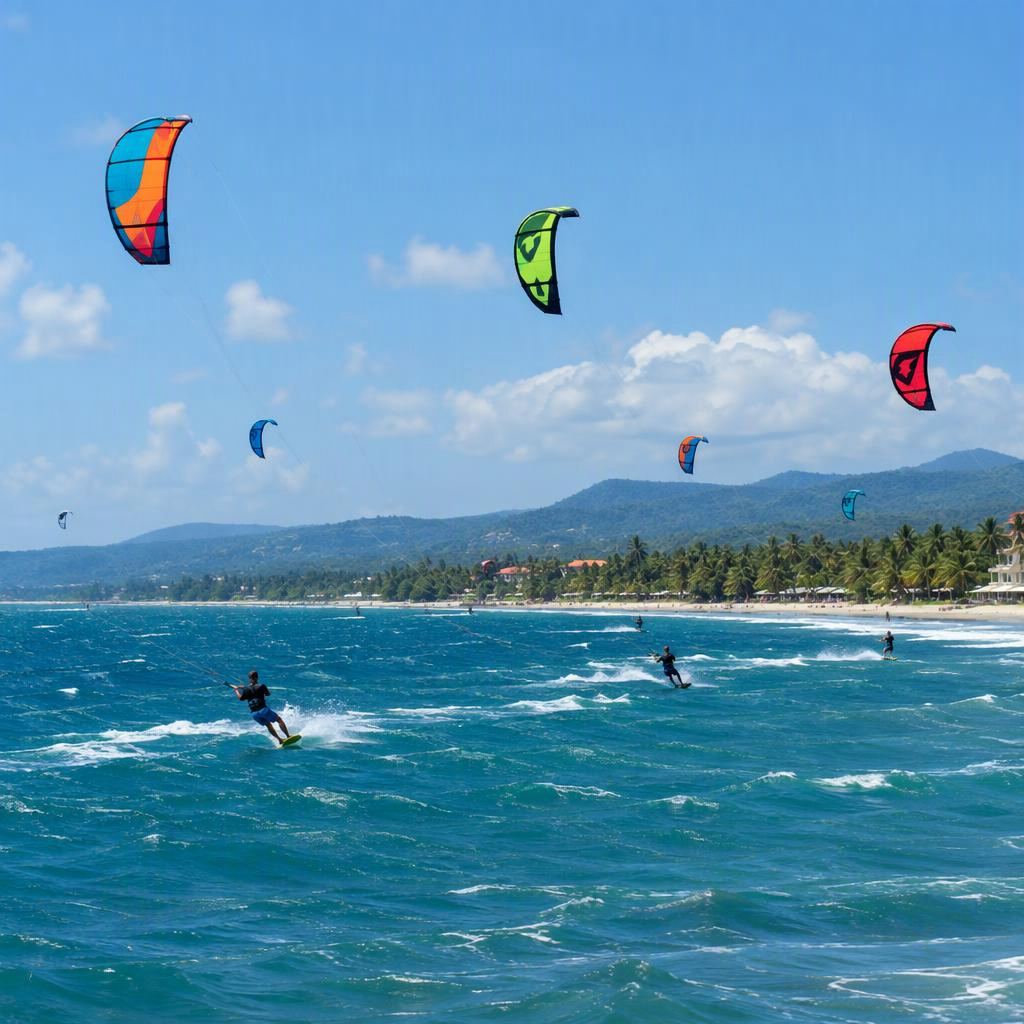
The Dominican Republic’s north coast is one of the best-known wind and wave areas in the Caribbean. Cabarete built its whole identity on the afternoon breeze, Encuentro is where the country surfs, and a remote fishing village in Montecristi has quietly become a flat-water kite spot. Away from the north, Las Terrenas, Macao near Punta Cana and a cove outside Santo Domingo round out the list.
This guide covers where to go, which beaches suit beginners, when the wind and swell arrive, and what lessons cost in 2026.
The short version: Base yourself in Cabarete. Surf at Encuentro Beach in the morning, kite at Kite Beach in the afternoon. Come June to August or December to April for wind, November to May for bigger surf, and summer to learn to surf on smaller waves. For empty flat water, drive 3 hours west to Playa Buen Hombre.
How the seasons work
Wind. The trade winds blow for much of the year, and on the north coast a thermal breeze adds to them from around midday. In Cabarete the most reliable months are June to August, with a second strong window from December to April; autumn is lighter. In Buen Hombre the strongest wind runs from about April to September. In Las Terrenas the breeze tends to be most reliable in winter and early summer.
Swell. North swells reach the Atlantic coast from roughly November to April or May, bringing bigger, more powerful surf. Summer is usually smaller and friendlier for learning. The Caribbean side is mostly flat, but south swells wake up a few spots near Santo Domingo and Barahona.
Time of day. Mornings are for surfing, when the wind is light or offshore and the waves are clean. By late morning or early afternoon the trade winds turn onshore, the surfers leave and the kites go up.
Surf beaches
Encuentro Beach (Puerto Plata)
Encuentro Beach lies about 5 km (3 miles) west of Cabarete, down a short road off the highway, and on most mornings the parking area is full of boards strapped to cars and motorbikes. The waves break over a reef, which creates several distinct spots. The best known are Bobo’s Point, La Izquierda (a left) and La Derecha (a right), with a beginner-friendly whitewater area on the inside where the schools teach.
From November to May, north swells bring surf that is best left to experienced riders. Summer is smaller and better for learning. Group lessons start at around $20 to $50 per person per session in 2026, with private lessons costing more; check whether the board, rash guard and transport from Cabarete are included. Ask for the first slot of the day.
It is not a swimming beach. The reef sits close to the surface at low tide and currents can be strong, so wear reef booties. Stay nearby at Natura Cabana, or in Cabarete, ten minutes away.
Playa Grande and Playa Preciosa (Río San Juan)
About 75 minutes east of Puerto Plata’s airport, Playa Grande is a two-kilometer sweep of golden sand under green cliffs, with several peaks along the beach when swell and wind line up. Local instructors offer lessons and board rental at the main entrance; a 2021 report put lessons at around $50 an hour, so expect similar or slightly more in 2026 and confirm on the spot.
Next door, Playa Preciosa often has bigger waves, especially toward the back of the bay, and instructors take more experienced students there. When a north swell is running, it is strong surfers only. Both beaches have strong rip currents and no lifeguards. Stay in Río San Juan.
Playa Bonita and Playa Cosón (Samaná)
In Las Terrenas, Playa Bonita is the main surf beach, with waves breaking off the reef and surf schools and board rentals nearby for beginners. December to April brings bigger winter swells, which surfers love and casual swimmers do not. The surf end can have rips and a dumping shore break, and parts of the bottom are rocky.
Further west, Playa Cosón is several kilometers of open Atlantic beach with waves and a shore break, especially in winter. Bodyboarders and beginner surfers like it on smaller days. The Samaná travel guide covers where to stay.
Macao Beach (Punta Cana)
Macao Beach, about 25 minutes north of Bávaro, faces the open Atlantic with no reef, which makes it the closest decent surf to the Punta Cana resorts. Expect consistent shoulder-high waves from November to April and smaller conditions in summer. Rental shacks rent boards by the hour, and a couple of small operators on the beach give lessons. Go in the morning before the ATV and buggy groups arrive. Sargassum can be heavy from May to September.
Playa Caribe and the south coast (Santo Domingo, Barahona)
Playa Caribe, a small half-moon cove a few minutes west of Guayacanes, is the go-to surf spot for Santo Domingo. Forecasters describe it as an exposed beach break with fairly reliable waves that works best on a south swell with light north-west (offshore) wind. Weekends bring surfers and bodyboarders from the capital. Do not count on rentals on the sand; ask at surf schools in the Juan Dolio area or the capital before you go.
West of the city, forecasters also list Playa Najayo as a surf spot, and on the Barahona coast Playa Los Patos has big waves for experienced surfers on the right swell. Neither has surf infrastructure.
Kitesurf and windsurf beaches
Kite Beach and Cabarete Bay (Puerto Plata)
Cabarete was a quiet fishing village until windsurfers found the reliable afternoon breeze in the 1980s. Since then Cabarete Beach has hosted the Professional Windsurfing World Cup and professional kite events, and it holds the annual Master of the Ocean competition. A reef offshore breaks the bigger swell, so the bay is manageable inside, with many kiters launching from the western end where the reef comes closer.
Kite Beach, about 2.5 km west of town, is the home base of most of the schools, with rigging lawns, rental shacks and cafés on the sand. Schools and forecasters quote about 15 to 25 knots on good days, with stronger gusts, from around midday until close to sunset. Flatter water inside the reef is where beginners learn, and a wave zone outside serves experienced riders. Wing foiling is taught at many of the same schools.
Many of the schools are affiliated with the International Kiteboarding Organization (IKO). Look for IKO or similar certification, radio helmets and a rescue boat or jet ski on standby. Be wary of freelance instructors with suspiciously low prices. Our Cabarete kitesurfing lessons page has the full breakdown.
Playa Buen Hombre (Montecristi)
Playa Buen Hombre is a long, remote beach in front of a small fishing village between Montecristi town and Punta Rucia. The bay inside the reef runs from a few inches to waist deep depending on the tide, so you can stand up almost anywhere, which makes learning fast and freestyle practice easy. Further out, the reef break offers waves for experienced riders.
The wind is strongest from about April to September, often 16 to 36 knots and building through the morning, and the local microclimate can make it windier than Cabarete. December to February is lighter, and October and November are the rainiest months. Kite Buen Hombre, a school and eco-lodge on the sand since around 2013, offers lessons, downwinders and simple bungalows; contact it directly for 2026 prices. There are no kite shops, so bring all your gear and spare parts, plus booties for the rocks, urchins and shells. See kitesurfing at Buen Hombre and the Montecristi and Punta Rucia guide.
Punta Popy (Samaná)
Punta Popy, the eastern end of the main beach in Las Terrenas, is the local base for kitesurfing and windsurfing, with schools and rental shops nearby. The water is often calm and shallow close to shore before the wind picks up, and an offshore reef softens bigger waves. It is a short walk from the center of town, and the breeze is most reliable in winter and early summer.
Which beach for your level
| Beach | Sport | Beginner | Advanced | Best season |
|---|---|---|---|---|
| Encuentro Beach | Surf | Inside whitewater, summer | Reef peaks, Nov to May | Mornings year-round |
| Playa Grande | Surf | With an instructor, calm days | Yes | Winter swell, summer calmer |
| Playa Preciosa | Surf | No | Yes | Winter swell |
| Playa Bonita | Surf | Yes, with schools | On winter swell | Dec to Apr |
| Macao Beach | Surf | Yes, small summer days | Moderate | Nov to Apr |
| Playa Caribe | Surf | Locals learn here | Moderate | South swell |
| Kite Beach | Kite, wing | Yes, inside the reef | Wave zone outside | Jun to Aug, Dec to Apr |
| Playa Buen Hombre | Kite | Excellent, standing depth | Freestyle and reef waves | Apr to Sep |
| Punta Popy | Kite, windsurf | Yes, with schools | Moderate | Winter and early summer |
How lessons work
Surfing. Most beginners book a group lesson on a foam board at Encuentro or Playa Bonita, ideally in the smaller summer surf. Schools at Encuentro also sell multi-day surf camps, and Cabarete has surf-camp accommodation.
Kitesurfing. Expect around 9 to 12 hours of instruction before you can ride on your own. Day one usually covers safety, wind theory and a small trainer kite on the beach, then body dragging in the water. In 2026, private lessons with an IKO instructor run roughly $75 to $90 per hour, three-day beginner courses around $280 to $350, and trial sessions from about $50. Schools suit active travelers aged around 12 and up. Confirm what is included: gear, boat support and the certification card.
Where to stay
- Cabarete: the obvious base, walkable to the bay and a short ride to Kite Beach and Encuentro, with hostels, surf camps, condos and boutique hotels but no large all-inclusives. The main road is noisy, so ask for a quiet room.
- Las Terrenas: surf at Playa Bonita, kite at Punta Popy, with a wide choice of small hotels and restaurants.
- Punta Rucia or Montecristi: more comfortable bases than Buen Hombre itself, unless you stay at the kite lodge.
- Bávaro: fine for a Macao surf morning from a resort week.
Safety
- There are no lifeguards at almost every beach in this guide. Surf with others, and check conditions before paddling out.
- Wear booties at Encuentro, Buen Hombre and Kite Beach, where reef, rock and urchins sit close to the surface.
- Respect the rips at Playa Grande, Preciosa, Macao and Bonita. If you get pulled out, paddle or swim parallel to the shore.
- Stay clear of kite lines if you are swimming at Kite Beach, Cabarete Bay or Punta Popy in the afternoon.
- Watch the season. September and October are the heart of hurricane season, and autumn wind in Cabarete is light and inconsistent. See best time to visit.
Not everyone in your group surfs? Our calm-water family beaches guide lists the sheltered options nearby, such as Sosúa Beach, 20 minutes west of Cabarete. The Puerto Plata travel guide covers the rest of the north coast.
Frequently Asked Questions
Where is the best surfing in the Dominican Republic?
Encuentro Beach, about 5 km west of Cabarete, is the country's main surf beach, with several reef breaks and schools on the sand. Playa Grande and Playa Preciosa near Río San Juan, Playa Bonita and Playa Cosón in Las Terrenas, and Macao near Punta Cana are the other main options. Near Santo Domingo, Playa Caribe works on a south swell.
When is surf season in the Dominican Republic?
On the north and east coasts, north swells bring the bigger surf from roughly November to April or May. Summer is usually smaller, which is better for learning. The south coast, around Playa Caribe and Najayo, depends on south swells.
When is the best time to kitesurf in Cabarete?
June to August is the most reliable stretch, with a second good window from December to April. The wind typically builds from around midday to near sunset, often 15 to 25 knots on good days. September to November is lighter and less consistent.
How much do kitesurfing lessons cost in Cabarete?
In 2026, expect roughly $75 to $90 per hour for a private lesson with an IKO-certified instructor, about $280 to $350 for a three-day beginner course of around 9 hours, and short trial sessions from about $50. Most people need 9 to 12 hours to ride independently.
Is Buen Hombre better than Cabarete for kitesurfing?
It is different. Buen Hombre has a huge, shallow flat-water lagoon where you can stand almost anywhere, strong wind from about April to September and almost no crowds, but very few facilities and a 3-hour drive from Cabarete. Cabarete has more schools, rentals, restaurants and nightlife.
Can beginners surf in Punta Cana?
Macao Beach, about 25 minutes north of Bávaro, is the closest surf to the Punta Cana resorts, with board rentals and a couple of small lesson operators. It is consistent from November to April and smaller in summer. The reef-protected resort beaches do not get surfable waves.