Montecristi
A historic border town of salt flats, mangroves and goat stew, at the foot of El Morro
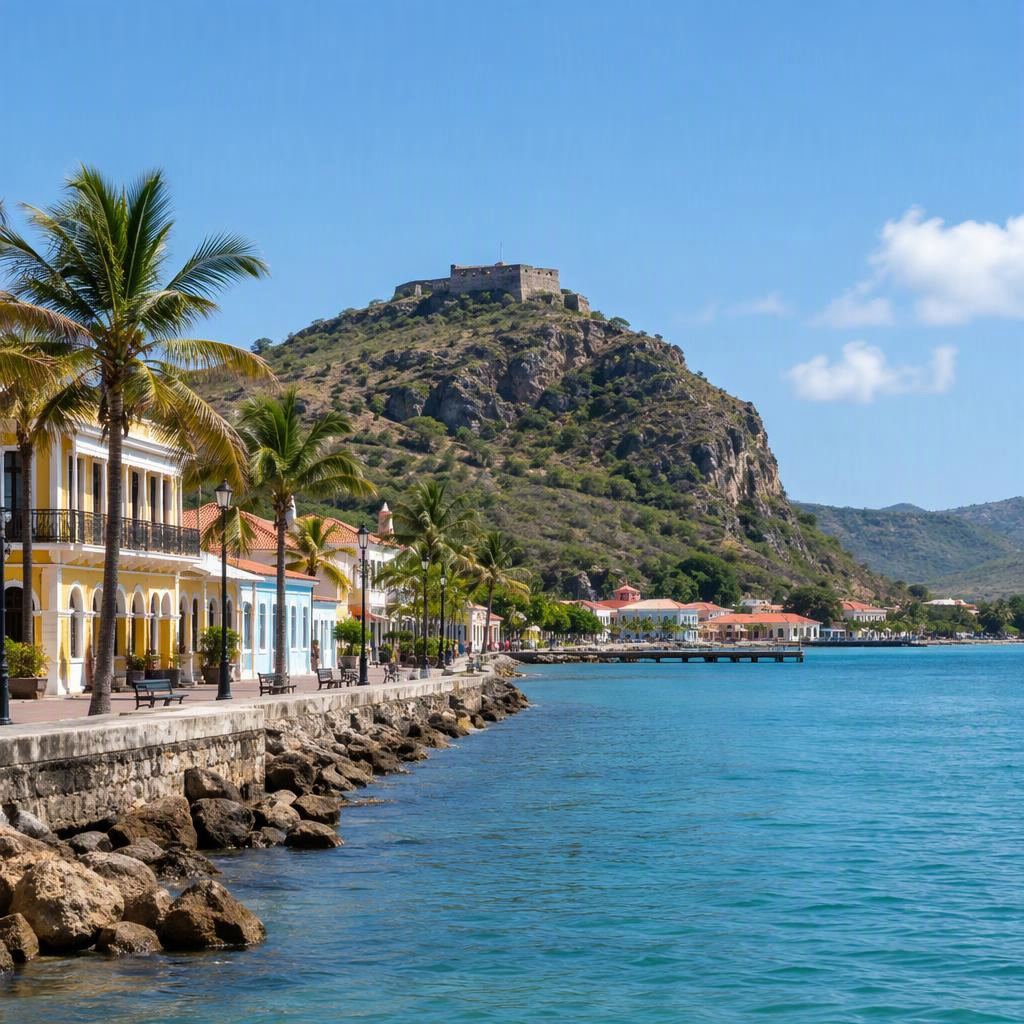
About Montecristi
Montecristi (officially San Fernando de Montecristi) is the provincial capital of the north-west, a low-rise town on a flat coastal plain a short drive from the Haitian border. It feels a long way from the resort coasts, because it is: about 270 km from Santo Domingo, 133 km from Cibao International Airport in Santiago and 171 km from Puerto Plata's airport. People come for El Morro, the boat trips and the food, and stay for the pace.
The town has more history than most beach bases. In 1895 José Martí and General Máximo Gómez signed the Manifiesto de Montecristi here, a founding document of Cuban independence, and the Casa Museo Máximo Gómez tells that story. The late 19th-century clock in the central park, its metal structure often attributed to Gustave Eiffel's workshop, is the town's landmark. Along the coast, the salt pans still produce salt by hand, and there is an interpretation center on salt production near the salinas.
The beaches are a few minutes away. The town beach, Playa Juan de Bolaños, runs along the Malecón and is where boats leave for El Morro, Isla Cabra and the outer cays. Playa El Morro is about 5 km north-east at the end of the road. Beyond, the mangrove channels of the national parks are best explored by boat with a local guide.
Food is a reason to come. Montecristi goat (chivo), usually stewed, is famous across the country, and the Malecón restaurants serve fish and lobster straight from the boats. Prices are local and the town is generally affordable.
Where to stay is limited and simple. The Wyndham Garden El Morro on the main highway is the most polished option, the El Morro Eco Adventure Hotel is the closest to El Morro, and Hotel Marbella faces the town beach with more mixed reviews. Book ahead for holiday weekends, when Dominican visitors fill the town.
Practicalities: the town has banks, supermarkets and the provincial public hospital, but you need a car or a tour to get around the wider area. It is hot and dry for much of the year and often windy. The town is quiet at night apart from the Malecón on weekends.
Best for: independent travelers, nature lovers, history fans and anyone combining the north-west with Santiago. Not for: travelers wanting a resort or nightlife. Start with Playa El Morro and Playa Juan de Bolaños, then read the Montecristi & Punta Rucia travel guide.
Highlights
- El Morro and Parque Nacional Montecristi
- Boat trips to Isla Cabra and the Cayos Siete Hermanos
- Malecón and Playa Juan de Bolaños sunsets
- Casa Museo Máximo Gómez and the town clock
- Artisanal salt pans
- Goat stew (chivo) and fresh seafood